 |
|
OPINIONS |
|
By.
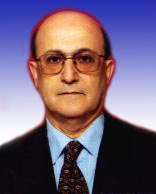
Dr. Ozer OZANKAYA
Modern Turkey is the only Muslim society in the world to have achieved secularism not only in her political but also in her social and cultural life. To understand the state of secularism in the present-day Turkey and its sources of strength despite various assaults against it, we must first see how it was institutionalized through Ataturk Reforms during the decades of the foundation of modern Turkey; then we can see what have been the main sources of religious reactionarism in this country since the end of the Second World War. II.
ATATURK REFORMS: Turkish Republic is based through Ataturk Reforms upon the principles of democracy and human rights and freedoms. Its chief motto and constitutionally guaranteed legitimacy principle has, from the first day on, been “sovereignty’s belonging to the people without any limitations or conditions whatsoever!” Therefore it is also based on the principle of secularism, as one of the major sources of assault against people’s sovereignty has everywhere been religious oppression, practiced for centuries under the form of theocratic state. So secularism has been rightly viewed by Ataturk Reforms as the indispensable characteristic of democracy. Turkish Republic is also founded on the recognition that democracy is possible only with a scientific mentality, and its second golden rule, inculcated to the modern Turkish culture through the educational institutions at every level, indicates “science, that is scientific method, as the’ best guide in life!’. Secularism being the sine que none of science is rightly conceived as synonymous with democracy. But the concept of ‘science’ that lies at the foundations of the Turkish Republic is the one that pays due consideration to the relativity principle, which is, as shall be seen below, of primary importance for a democratic culture and which can be properly conceived of only in a secular environment. Ataturk Reforms which actually represent the Turkish Renaissance and Enlightenment in the 2Oth century were based upon the observation that the history of democracy and human rights has been the history of fight to show the relative character of all social institutions, moral precepts and therefore laws regulating human relations. In a way it declared, just as Francis Bacon did at the emergence of the modern society, that “he who started out with absolute convictions is bound to fall soon into the darkest of doubts”. Just as Lessing and Kant had insisted on the necessity of the freedom of questioning, asking for proofs and testing for oneself, without which no faith would have been possible, so did the republican regime in Turkey. Perception of the perpetually changing character of the whole reality and that of the impossibility of any “complete” explanation or “system” has thus formed the very foundation of the democratic legitimity in modern Turkish political culture. For it is known that thanks to this perception it became increasingly possible for mankind to avoid the mistake of considering social institutions, laws, beliefs, a.s.o. as sacred and intangible things. The only unchangeable rule for human life was therefore to be the recognition to every individual citizen the freedom of discussing public interest everyday aknew. This, in its turn, requires the development of an atmosphere of tolerance, nourishing in the individuals the qualities of courage and moderation at the same time so that they can reach at compromises among themselves on their contradictory interests. Through Ataturk Reforms this basic stand was institutionalized. III. THE SUBSTANCE OF SECULARISM Turkish Republic is thus founded on the conscious recognition that democracy and human rights can only be realized in a social environment where every aspect of public life is open to free discussion, and it is therefore never subject to immutable, indisputable laws, whether from religious or other origins. This is the basis of legitimacy for all the fundamental social functions carried out by family, Government, education, economy and ultimate values. As this is the very substance of a secular order, the realization and safeguard of human rights depends upon the foundation of a secular sociopolitical system, considering thus as illegitimate any initiative, any program which aims at regulating human relations by religious laws. Therefore secularism is the true guarantee of the people’s sovereignty principle, assigning the legislative power uniquely to the national assembly, itself subject to periodical reelection by the people. It is thus assumed in this system that no national assembly is authorized to pass unchangeable laws under the sanction of loosing immediately its legitimacy, as such a legislation would constitute an act of usurpation of the people’s will. But there is more to it: Turkish Republic is also based on the awareness that by eliminating religious oppression secularism would at the same dime create a solid environment, an unshakeable foundation against any other dogmaticisms and oppressions, whatever their character. Because under a secular system not only scientific mentality but also democratic culture flourishes which permits individual human personality to unfold. IV. PARALLELISM BETWEEN THE CRITERIA OF SCIENTIFIC VALIDITY AND DEMOCRATIC LEGITIMACY One can conclude from what is said above that the Turkish Republic and the modern Turkish society in general are formed with the recognition of the fact that the validity principles of scientific method and the legitimacy principles of democratic government are in perfect parallelism. Principles of Scientific Validity Criteria of Democratic Legitimacy 1. Objectivity 1. Free access to information on public affairs 2. Concreteness of the reality 2. Periodic elections: Citizens’ right to make new observations and new evaluations 3. Scepticism: questioning mind 3.
Parliamentary controls and deliberations 4. Responsibility and accountability to the people 1. Just as the scientist must, in Claude Bernard’s words, “leave outside the door not only his overcoat but also his believes before entering into the laboratory”, similarly in democracy no facts concerning public life should be either disguised or falsified whether for the sake of a creed, doctrine or what not. Loyalty to the facts is thus basic to both science and democracy. 2. Reality is always concrete: no theory, no generalization can be sufficient to direct efficiently the real life situations which carry unique aspects of the place and the time in which they occur. In other words there is neither universal problem nor universal solution. This holds true for the democratic legitimacy as well: life never follows theories; the latter must follow it and go through necessary changes. Hence the best measure against any authoritarianism, whether religious or otherwise, is free and periodical elections which signify citizen’s right to make up for his/her probable research defects and evaluation mistakes at the time of the previous elections. It would therefore be illegitimate for any political body to attribute to the laws the character of unchangeability. 3. Modern science is only possible thanks to the questioning mind. I remember a professor of physics beginning his conference by asking his audience whether he shou1d leave in the air the glass of water that he was holding in his hand. Then he replied the question himself by saying “Perhaps I shouldn’t, because it may drop!” By this he of course tried to warn the audience against the error of perfect and complete knowledge. No man is unmistakable on the one hand and reality is subject to perpetual change, on the other. So one has to question from time to time even his best established knowledge and convictions. In fact one of the preconditions of scientific validity is “the support of independent expert opinion”. Scientific validity requires one to be ready to go through the most rigorous investigations and to feel obliged even to those who show one his/her mistakes or shortcomings. There is nothing of the sort in dogmatic thinking, whether religious or secular. Democratic legitimacy also contains the same principle which finds its expression in parliamentary debates, investigations, interpellations, in freedom of press, university autonomy and independent courts of justice, etc. without which the principle of political accountability can not even be conceived of let alone be put into functioning. 4. Another principle of the scientific validity which requires working with well defined concepts to prevent ambiguities and confusions has its counterpart among the democratic legitimacy principles requiring political parties and politicians to present to the people clear, well defined programs, free from demagogies. On the other hand the concept of “majority vote” itself should be clearly defined so that the error of presenting it as the expression of homogeneous interests, desires and opinions can be prevented and the reason for the principle of periodical general elections can properly be understood. V. DEMOCRATIC INSTITUTIONS IN MODERN TURKEY These are in short the basic considerations behind the Ataturk Reforms’ two fundamental principles, one accepting the science as the best guide in life and the other declaring people’s sovereignty as unconditional. And the social institutions of modern Turkey such as State, family, education, economy and ultimate values, language, arts were formed on the basis of these two principles. In fact these have been and still are the real sources of strength of the present day Turkish society and State. On the basis of these principles: 1. State was made secular and democratized: A) Sultanate and caliphate were abolished; religion was no more accorded any legislative authority, the unique organ to make laws to govern human interrelations was Grand National Assembly, itself subject to free periodical elections; individuals were freed from being “subjects” of the sultan and became instead “citizens, the real possessors of the sovereignty’, enjoying all human rights and freedoms including freedom in choosing one’s religion and in practicing or not practicing it, without any limitations stemming from sexual, religious, racial, ethnic, professional differences whatsoever. B) A democratic definition of the “Turkish nationality” and “Turkish fatherland”, respectful of other nations, free from all racist elements, leaving outside every irredentism and therefore based upon the principle of “peace at home, peace abroad” that has led Turkish politics since 75 years and earned Turkey a great international respect. 2. Family was made secular and therefore democratic: Turkish Republic is one of the leading countries in the world to recognize equal citizenship and therefore human rights to women. Together with the secular socio-political order family ceased to be organized and directed under religious codes and began to be a free voluntary association between a man and woman, based upon the principle of equality of rights and obligations. Women received rights to divorce, to equal share of inheritance, to vote and to be elected to public posts, to choose their occupations, and to take part and carry responsibility in public life, etc. In short Republican Regime represents both politically and socially the will to eradicate every remnant of the medieval oppressive concept of “the inferior sex” and sublimates instead the female sex as the ‘best half” of the same entity. 3.
Education was rendered secular and democratized: All of the educational
institutions organized and run according to religious precepts were
abolished and education was made entirely secular at each level
through the establishment of a national ministry of education and
modern schools and universities based on the principles of general
compulsory primary education and equal right to education to every
citizen without any sexual, religious, ethnic, ... discrimination. Thanks to the secular socio-political order, the language of education was also freed from the yoke of the Arabic and Persian languages imposed on Turkish people through religious oppression. Thus one of the chief requirements of a modern culture that is the presence of a developed written language was met through the free development of the Turkish language into a language of science, arts and technology, thanks to the secular character of the regime. Together with that reform Turkish minds in general were freed from the fetishistic belief considering Arabic to be sacred and to have a supernatural power even if one did not understand a single word of it simply because the coranic verses were expressed in it. 4) Economy is developed and democratized in the secular social-political order: The theocratic order was a major impediment to the capital accumulation and therefore to the economic development through its various bans and restrictions such as the bans on the female economic enterprises of various sorts, almost crippling half the population or the ban on banking as interest was deemed to be profane. Wealth and prosperity and therefore productive, efficient labour came to be freely seen as desirable and even necessary for both personal and national freedom and independence. Thanks to its consistently democratic and scientific character Ataturk’s Turkey could also make an independent minded critical analysis of both capitalism and socialism and a real contribution in the field of economic democracy. This aspect being only indirectly related to our subject matter shall not be elaborated here further; but that much I cannot stand adding: in the shortcomings and even failures of the secularization / democratization of human societies the dogmatic concept of both socialism and capitalism has played and still plays a major role. 5. Culture in general was democratized through secularization: We have already mentioned the language reform through which Turkish could develop into a modern written language of science, arts and technology and the peoples ‘minds were freed from the yoke of fetishistic beliefs. Another reform indispensable to this one and having the same democratizing effects as the latter was the alphabet reform through which the Turkish language obtained for the first time in its history the possibility of being written and read correctly, as the Arabic alphabet did not have vowels, Arabic being a language of consonants whereas Turkish has eight different vowels. With the introduction of the phonetic Turkish alphabet formed of Latin characters both old irrational thinking had a fatal blow as the rate of literacy boomed dramatically and the publication of all sorts of literature flourished, every aspect of the Turkish social, psychological and moral life began to be expressed in written forms of scientific work, memoirs, biographies, novels, stories, theater plays, poems, song words, etc. Other plastic arts as well as music and drama were also rendered free and could develop and a national style, taste and trait could also come to fore, and all of these thanks to secularization of the society. - Reform of head-dress and costumes in general is another very important part of the secularization / democratization of the Turkish social life through Ataturk reforms. The ban on carrying of fez and the introduction of modern international dress represented in fact the lift of the religious oppression on the Turks’ minds and souls prohibiting them to wear hat and to dress themselves as they liked and forcing them instead to dress in a way as to be clearly separated from the modern democratic world. Besides, this reform also outlawed the wearing of dresses symbolizing any social status differentiations, incompatible with a democratic society, such as vizir, pasha, sheikh, noble, agha, etc. Women also were freed from wearing veils through the setting of examplar in schools where new generation female population have been brought up in a co-educational environment, dressed in complete freedom from any anti-democratic oppression and with the full confidence in their human value and capacity. This reform of head-dress and costumes allowed also the democratization / secu1arization of the international relations of the Turkish nation symbolizing her complete agreement with modern nations on all essential principles of the modern civilization which are those of democracy. IV. THE STATE OF SECULARISM IN TURKEY TODAY 1946 symbolizes a turning point in Turkish history and I believe in the world history in general. In Turkey it represents both the third and lasting trial of the multy-party political regime even in the absence of Ataturk as a result of his early and unexpected death and shared by ever growing majority of the people as indispensable for democracy, a natural consequence of the Ataturk Reforms. In fact Turkey had tried this regime twice before under Ataturk’s leadership and in both cases the freedom of association was misused by antidemocratic segments of the country, chiefly in the name of religion, not excluding the use of outright brutal force and enjoying very significant foreign support. By the time of this third trial in 1946 the educational and cultural level of the population had significantly increased, a non-negligible group of intellectuals was created which could lead public opinion in the evaluation of public interest, and an important degree of industrialization which, according to Walt W. Rostow allowed the country to enter into the stage of take-off was reached. Therefore multy-party regime could now be saved from being violated through the exploitation of religious beliefs. But 1946 signifies also the formation of a world order dominated by two super power, one American and the other Russian, the former making the championship of capitalist and the latter that of socialist system, both dogmatically and both claiming to represent the true democracy. The outcome was a cold-war period which lasted a little less than half a century and was conducted under the threat of nuclear terror balance. None of these super powers favoured, however, the development of a truly democratic culture particularly in the under-developed countries. So the political life all over the world has been dominated by either capitalists or Marxists or by both, none of which tolerated the true democracy. The alliance with the United States did not, as a matter of fact, enhance the development of democracy in Turkey, it has rather retarded it. As the principal motive of this super power has not been to support the industrial development and social justice, it could very easily get along with and in fact did not hesitate to give support to medieval antidemocratic regimes everywhere in the world. The same happened in Turkey too. Whereas all of the democratic development and social justice were brought to the country by Ataturk reforms, direct and indirect American support went increasingly during the cold war period not to the further success of these democratic efforts, but to the anti-democratic forces which took on at an ever growing extent the character of a religious and fascist reactionary movement. I don’t
need here go into a detailed anatomy of colonialism or neo-colonialism.
I think it should suffice to say that “foreign exploitation and
intervention” is not an empty phrase. What is new presented in the
mass media as “religious revival movements” in non-developed areas
of the world are, to a very great extent supported directly or indirectly
by the major industrial countries’ governments. With the purpose
of preventing there an industrial development from taking place,
exploiting them as free markets and employing their manpower as
cheap labour provoking there internal divisions and separatist movements
and selling arms to parties, etc. But in vain! Because in the case of Turkey the progress in the fields of scientific thinking, democratic rights and freedoms, national independence, people’s sovereignty and economic (=industrial) development, has already since long reached the “point of no return”. Therefore no internal and external selfish efforts can succeed reverse the history. The best proof of this confidence lies in the fact that the very political party which proceeded, at its origin in 1946, through the exploitation of reactionary segments of Turkish society and which run the country during by far the largest part of this period and did not hear any objection from the West as to her glaring violation of human rights and freedoms, reached the point of electing a woman as its chairman and as the prime minister of Turkey. This is one of the ultimate tests of success of Ataturk’s project of civilization as well as the proof of the strength of the democratic, secular Turkish society and State as founded by Ataturk. * Paper presented to the “DIALOGO MEDITERRANEO-LEVANT SEA ROUTE” June 15-16, 1993, Venice, Italy. JANUARY / FEBRUARY 2003 |
 Secularism
in Turkey*
Secularism
in Turkey* 