 |
|
|
|
Lale Eskicioglu
For my first column of Literary Leaf, I decided to start with one of Turkey's world-renowned authors, Yashar Kemal. Although I had read Yashar Kemal's Ince Memed many years ago, when a recent publication of Edouard Roditi's translation came out in 2005, with a new introduction by the author, I decided to read it again -this time in English. I was not disappointed. Edouard Roditi's rendition is true to the original spirit of the region of Çukurova where the story takes place, and to the novel's characters, Memed, Hatçe, Abdi Agha and the others. Ince Memed takes place in the 1930s, in Southern Anatolia plains lined with the Taurus Mountains. It is the story of love, struggle, poverty, despotism of landlords and, ultimately, of revenge. It also depicts the transformation of a poor rebellious boy, Memed, into a myth. In the introduction of the book, Yashar Kemal explains that it took him three months to complete Ince Memed, which he wrote in 1953. Upon finishing the 436-page book, Kemal realized that Memed was in fact not finished with him: "That was not the end of the story. For a long time after, Memed gave me no peace. I wrote three more books about him. I was twenty-five years old when I started writing Memed. Memed was twenty-one. I was over sixty when I finished the fourth volume. Memed was only twenty-five." So, Kemal ended up composing a 2200-page-long epic about the boy who, in Kemal's words, "exercised such a hold on his imagination." Why this obsession? Kemal explains that it is the Memed's tremendous will for survival that is so captivating; his strong determination against the immense suffering humanity faces in the forms of hunger, deprivation, exploitation, misery and humiliation.
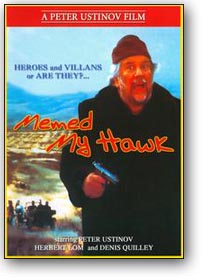
Ince Memed's English title is Memed, My Hawk, which is a reference to one of the nicknames given to Memed by the peasants grateful to him for protecting the poor and oppressed. Memed is seen as a falcon or a hawk against the tyranny of the greedy Agha. In 1984, famous British actor, writer and director Peter Ustinov transformed this most celebrated of Turkish novels into film. Ustinov (1921 - 2004) wrote the screenplay of Memed, My Hawk (also known as The Lion and the Hawk) and he played the role of Abdi Agha. Since its first publication 56 years ago, Ince Memed has been translated into over 80 languages. There is also a comic book version of Ince Memed, created by Turkish cartoonist and illustrator Ismail Gülgeç.
Unembedded: Two Decades of Maverick War Reporting by Scott Taylor
DECEMBER 2009 |
|
| l | |
 Starting
this month, thanks to the opportunity provided by Bizim Anadolu,
we will be able to discuss Turkish, Canadian and World literature
in this new column, Literary Leaf. While so many Canadian authors
are making news around the world, our own Turkish writers and poets
are also-slowly but surely-entering the literary stage in Canada.
Last year, we celebrated Montreal-resident, Turkish poet and author
Ilyas Halil's 50 years of poems and stories. This year, we rejoiced
at the publishing of Dr. Özay Mehmet's first fiction book, Uzun
Ali, which tells the story of a Cypriot family saga. We are proud
of many other Turkish-Canadian authors who continue to enrich our
lives through their words in Turkish and in English. Hopefully we
will have the chance to talk about all of them, one by one, month
after month. Literary Leaf will also include mentions of non-fiction
books that might be of interest to Turkish Canadians.
Starting
this month, thanks to the opportunity provided by Bizim Anadolu,
we will be able to discuss Turkish, Canadian and World literature
in this new column, Literary Leaf. While so many Canadian authors
are making news around the world, our own Turkish writers and poets
are also-slowly but surely-entering the literary stage in Canada.
Last year, we celebrated Montreal-resident, Turkish poet and author
Ilyas Halil's 50 years of poems and stories. This year, we rejoiced
at the publishing of Dr. Özay Mehmet's first fiction book, Uzun
Ali, which tells the story of a Cypriot family saga. We are proud
of many other Turkish-Canadian authors who continue to enrich our
lives through their words in Turkish and in English. Hopefully we
will have the chance to talk about all of them, one by one, month
after month. Literary Leaf will also include mentions of non-fiction
books that might be of interest to Turkish Canadians.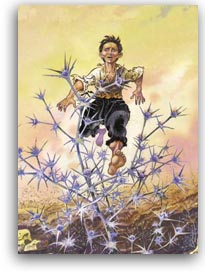 Yashar
Kemal is a great story teller. In fact, he is the one who pioneered
this literary genre about peasants and their daily struggles against
nature, against ruthless landlords and also against each other.
Panoramic descriptions of the mountains and plains of Southern Anatolia
are so powerfully evocative that you can almost feel the forbidding,
pervading thistles -the same thistles that pricked the legs of Memed
as a child and from which only he could finally rid the land off.
Yashar
Kemal is a great story teller. In fact, he is the one who pioneered
this literary genre about peasants and their daily struggles against
nature, against ruthless landlords and also against each other.
Panoramic descriptions of the mountains and plains of Southern Anatolia
are so powerfully evocative that you can almost feel the forbidding,
pervading thistles -the same thistles that pricked the legs of Memed
as a child and from which only he could finally rid the land off.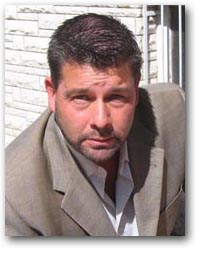 In
September of 2004, Canadian journalist Scott Taylor and Turkish
Journalist (for the daily newspaper Sabah) Zeynep Tugrul
venture into the township of Talafar, Iraq, where the violence between
U.S. troops and resistance fighters is escalating by the hour. Scott
and Zeynep are after an interview with a warlord known
as Dr. Yashar. Instead of finding Dr. Yashar, Scott
and Zeynep find themselves taken hostage by a group of Islamic
extremists. They are blindfolded, handcuffed and threatened with
execution by their Kalashnikov-bearing captors. The five-day ordeal
of torture, interrogation and threats of execution has a happy ending
thanks to-according to Scott-the bravery of Zeynep Tugrul,
the Turkish journalist. A very fascinating story and just one of
many in Scott Taylor's memoirs called Unembedded: Two Decades
of Maverick War Reporting.
In
September of 2004, Canadian journalist Scott Taylor and Turkish
Journalist (for the daily newspaper Sabah) Zeynep Tugrul
venture into the township of Talafar, Iraq, where the violence between
U.S. troops and resistance fighters is escalating by the hour. Scott
and Zeynep are after an interview with a warlord known
as Dr. Yashar. Instead of finding Dr. Yashar, Scott
and Zeynep find themselves taken hostage by a group of Islamic
extremists. They are blindfolded, handcuffed and threatened with
execution by their Kalashnikov-bearing captors. The five-day ordeal
of torture, interrogation and threats of execution has a happy ending
thanks to-according to Scott-the bravery of Zeynep Tugrul,
the Turkish journalist. A very fascinating story and just one of
many in Scott Taylor's memoirs called Unembedded: Two Decades
of Maverick War Reporting. 
