 |

|
|||
|
Lale Eskicioglu
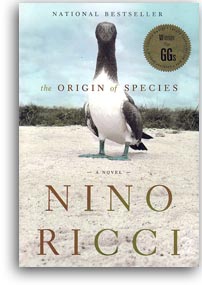
Ricci's Origin of Species has a few themes in it. It has Darwin and the theory of evolution, of course. It also has Chernobyl and the radioactive rains; El Salvador and its civil war; fatherhood; Freud; AIDS; 1980s Montreal and Canada; literature; Sweden; multiple sclerosis; Pierre Trudeau; immigrants in Canada and racism; Quebec separatism; religion, God and creation; sex; Greenpeace; a couple of Ph. D. dissertations; communism and the Soviet Union; smoking and trying to quit; Amnesty International; abortion; fishing; Bill 101 - the charter of the French language; Ecuador and the Galapagos Islands; the flora and fauna thereof; landlords, lease renewals, rent increases and the tenants' associations; money; art; and a variety of languages. Ricci has even managed to sneak in a suicide in there.
The protagonist, Alex, is an Italian Canadian in his thirties living in Montreal and trying to finish his Ph. D. thesis. Alex, throughout the book, is never happy, not once. He is forever regretting everything he says or does. Page after page, we read that Alex had misstepped or overstepped, or botched it, or crossed a line or had some such negative analysis of his last action. He shouldn't have said it, he shouldn't have done it, he shouldn't have gone there, he should have gotten out of there… He is always doing the wrong thing and wishing that he hadn't. The only relief we get from Alex's lackluster and humourless life is his imagined conversations with CBC radio show host Peter Gzowski (1934 - 2002). Alex amuses himself, and mercifully us, with interspersed interviews with Peter whom he, even in his own mind, manages to frustrate as well.
The connection to Darwin and to the original Origin of Species consisted of the most interesting parts of the book. Alex visits the Galapagos Islands as Darwin had done 150 years before him. There he meets Desmond, supposedly the most despicable character in the book, although I liked him the best, given the choices. Galapagos experience, as exciting and as extraordinary as it was, fails to be something Alex could tell his friends about. The reader is asked to believe that what happened in Galapagos changed Alex for life, and it may very well have, but so much happens in Alex's life that we can't be sure which one makes an impact if any. Nino Ricci is clearly one of the greatest Canadian writers but The Origin of Species is trying so hard to cover all the bases that it fails to be one of the greatest Canadian novels. Non-fiction
of the month: From Osman
to Atatürk
Mesut Uyar, a specialist in war studies and military history, is a career military officer and teaches international relations and security studies at the Turkish Military Academy. Erickson and Uyar have collaborated on the book A Military History of the Ottomans: From Osman to Atatürk, to give a thorough development of Ottoman military institutions through centuries. It is a must read for anyone who is interested in Ottoman and Turkish history, as well as the Ottoman involvement in the First World War. Dr. Edward J. Erickson's latest book Gallipoli: The Ottoman Campaign is due out June 30, 2010. April 2010
|
|||
| l | |||
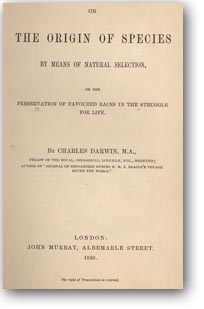 Nino
Ricci's latest novel, which received the 2008 Governor General's
Award for fiction, shares its title with Charles Darwin's 1859 book
on evolution and natural selection.
Nino
Ricci's latest novel, which received the 2008 Governor General's
Award for fiction, shares its title with Charles Darwin's 1859 book
on evolution and natural selection.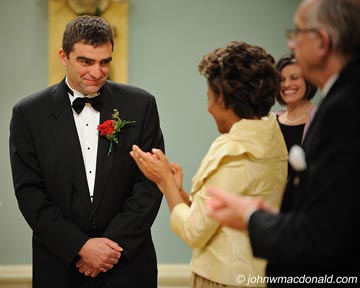
 A
number of friends, associates and lovers come and go, and Alex remains
to be a failure in his mind and an unpleasant personality in the
reader's. He is such a depressed and depressive figure that nothing
ever seems to go right for him. As problems pile up at a staggering
rate, the plausibility of his entire being suffers. I was so tired
of his wallowing in his own misery that I wouldn't have been sorry
if the author had killed Alex on Mount Royal when he was walking
around the Cross in the middle of the night and thinking "Some
thug could come out of the bush, some wild animal, some fearsome
monster of the soul."
A
number of friends, associates and lovers come and go, and Alex remains
to be a failure in his mind and an unpleasant personality in the
reader's. He is such a depressed and depressive figure that nothing
ever seems to go right for him. As problems pile up at a staggering
rate, the plausibility of his entire being suffers. I was so tired
of his wallowing in his own misery that I wouldn't have been sorry
if the author had killed Alex on Mount Royal when he was walking
around the Cross in the middle of the night and thinking "Some
thug could come out of the bush, some wild animal, some fearsome
monster of the soul." 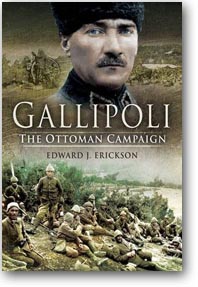 Dr.
Edward J. Erickson is an associate professor of military history
and teaches Operational Art at the Command and Staff College, Marine
Corps University in Quantico, Virginia. Dr. Erickson is a reputed
expert on the Ottoman Military. An associate of International Research
Associates in Seattle, Washington, Edward J. Erickson has written
many books on Ottoman History and World War I.
Dr.
Edward J. Erickson is an associate professor of military history
and teaches Operational Art at the Command and Staff College, Marine
Corps University in Quantico, Virginia. Dr. Erickson is a reputed
expert on the Ottoman Military. An associate of International Research
Associates in Seattle, Washington, Edward J. Erickson has written
many books on Ottoman History and World War I. 
